Most safari itineraries give Tarangire just one night. That is a mistake. Here is why this elephant paradise and baobab wonderland deserves 2-3 days of your trip.
If you have researched Tanzania safaris, you have probably noticed that Tarangire National Park gets squeezed into itineraries as a brief stopover — one night on the way to Ngorongoro and the Serengeti. We see it constantly: travellers arrive, spend a single afternoon game drive in the park, sleep one night, and leave the next morning thinking they have "done" Tarangire.
They have not. Not even close.
After years of guiding safaris through every corner of Northern Tanzania, we can say with conviction that Tarangire is one of the most underrated national parks in East Africa. It deserves at least two full days, and ideally three. In this guide, we will explain why — and how Tarangire compares to the mighty Serengeti across every metric that matters to safari travellers.
The Case for Tarangire: Africa's Overlooked Gem
Tarangire National Park covers 2,850 square kilometres of rolling savannah, swampy floodplains, and ancient baobab forests in Northern Tanzania. It sits just 120 kilometres southwest of Arusha, making it the most accessible major park on the Northern Circuit — and perhaps the most rewarding per hour spent inside.
The park is named after the Tarangire River, a lifeline that draws enormous concentrations of wildlife during the dry season (June to October). When water sources elsewhere dry up, animals converge on this river in numbers that rival anything the Serengeti produces outside of migration season. Elephant herds numbering 300 or more gather along the riverbanks. Buffalo, wildebeest, zebra, giraffe, eland, and oryx crowd the shrinking waterholes. Predators follow — lion prides, leopards, cheetahs, and enormous populations of pythons that drape themselves in the sausage trees.
Yet because the Serengeti has the Great Migration and Ngorongoro has the Crater, Tarangire gets treated as the warm-up act. That is a disservice to a park that stands confidently on its own merits.
Interested in experiencing Tarangire properly? Contact our team to build an itinerary that gives this park the time it deserves.
Wildlife Comparison: Tarangire vs Serengeti
Let us compare the two parks head-to-head across the categories that matter most to safari-goers.
| Category | Tarangire | Serengeti |
|---|---|---|
| Size | 2,850 km² | 14,763 km² |
| Elephants | 3,000+ (largest herds in Tanzania) | ~6,000 (spread across vast area) |
| Elephant density | Very high — herds of 100-300 common | Low — scattered in small groups |
| Lions | Resident prides, tree-climbing behaviour | Large prides, famous named prides |
| Leopards | Good sightings along river | Excellent, especially Seronera Valley |
| Cheetahs | Present but less common | Excellent on open plains |
| Bird species | 550+ (highest in Northern Circuit) | 500+ |
| Great Migration | No | Yes (seasonal) |
| Baobab trees | Iconic — thousands of ancient specimens | Rare |
| Crowds | Low to moderate | High in peak season |
| Park fees (2026) | $53/day adult | $60/day adult |
The numbers tell an interesting story. Tarangire is smaller, yes, but that concentration of wildlife in a compact area means you spend less time driving between sightings and more time actually watching animals. On a good dry-season day in Tarangire, you might see more elephants in a single afternoon than you would in three days in the Serengeti.
The Elephants: Tarangire's Headline Act
Tarangire's elephant population is its crown jewel, and no written description fully prepares you for the experience of encountering these herds in person. During the dry season, family groups converge on the Tarangire River in gatherings that can number 200 to 300 individuals. Matriarchs lead their families to water, calves play in the mud, young bulls test their strength in sparring matches, and the deep rumble of elephant communication vibrates through your chest even from 50 metres away.
These are not zoo elephants or habituated animals performing for cameras. These are wild elephants navigating a landscape they have known for generations, following ancient migration routes between the park and surrounding Maasai lands. The Tarangire elephant population is one of the most studied in Africa, with researchers tracking family groups over decades. Some of the matriarchs our guides point out have been known by name for 30 years or more.
The Serengeti has elephants too, of course, but they are spread across an area five times larger. You might see a small family group here, a lone bull there. The concentrated, herd-scale elephant experience that Tarangire delivers is genuinely unique in East Africa.
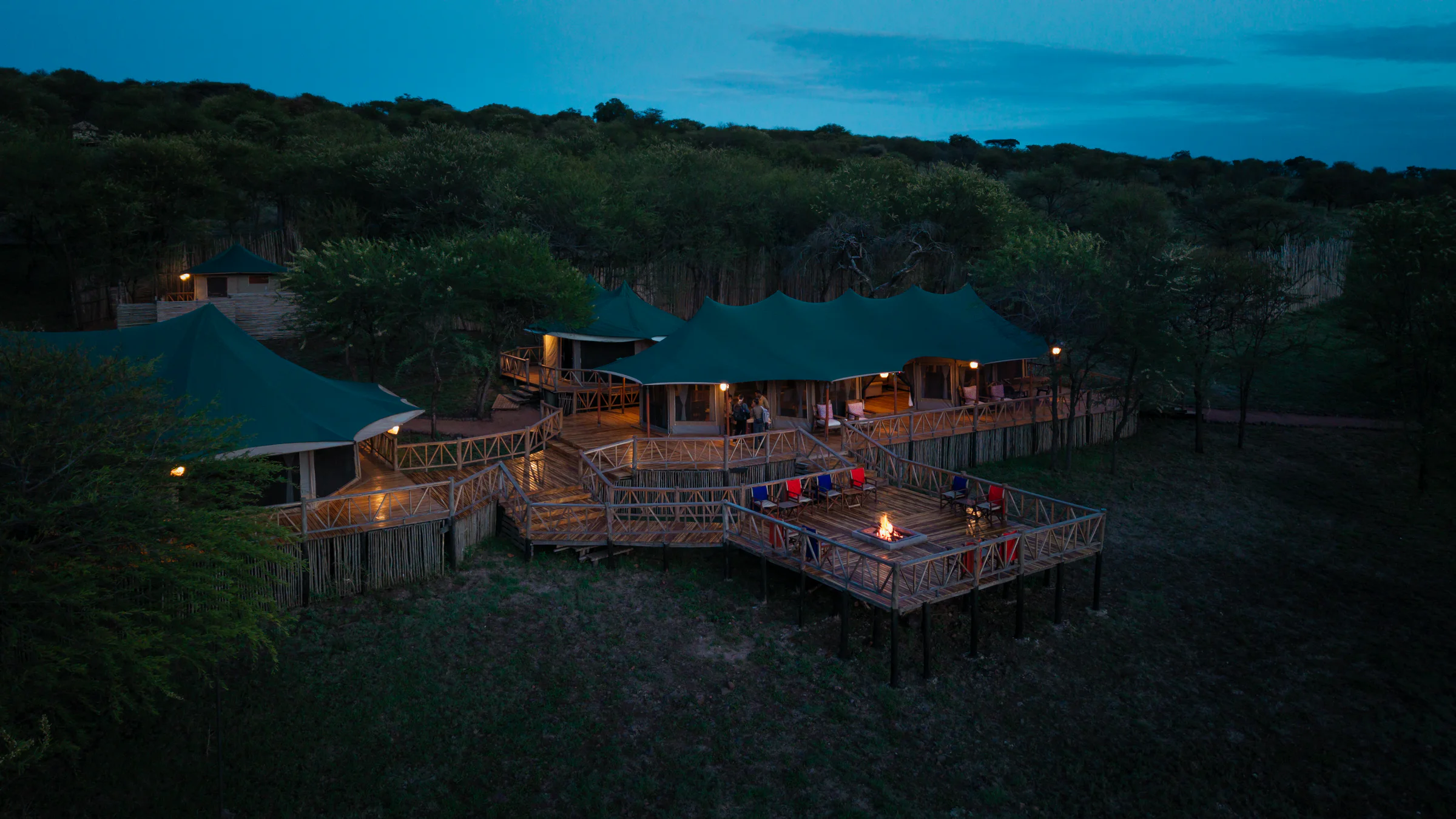
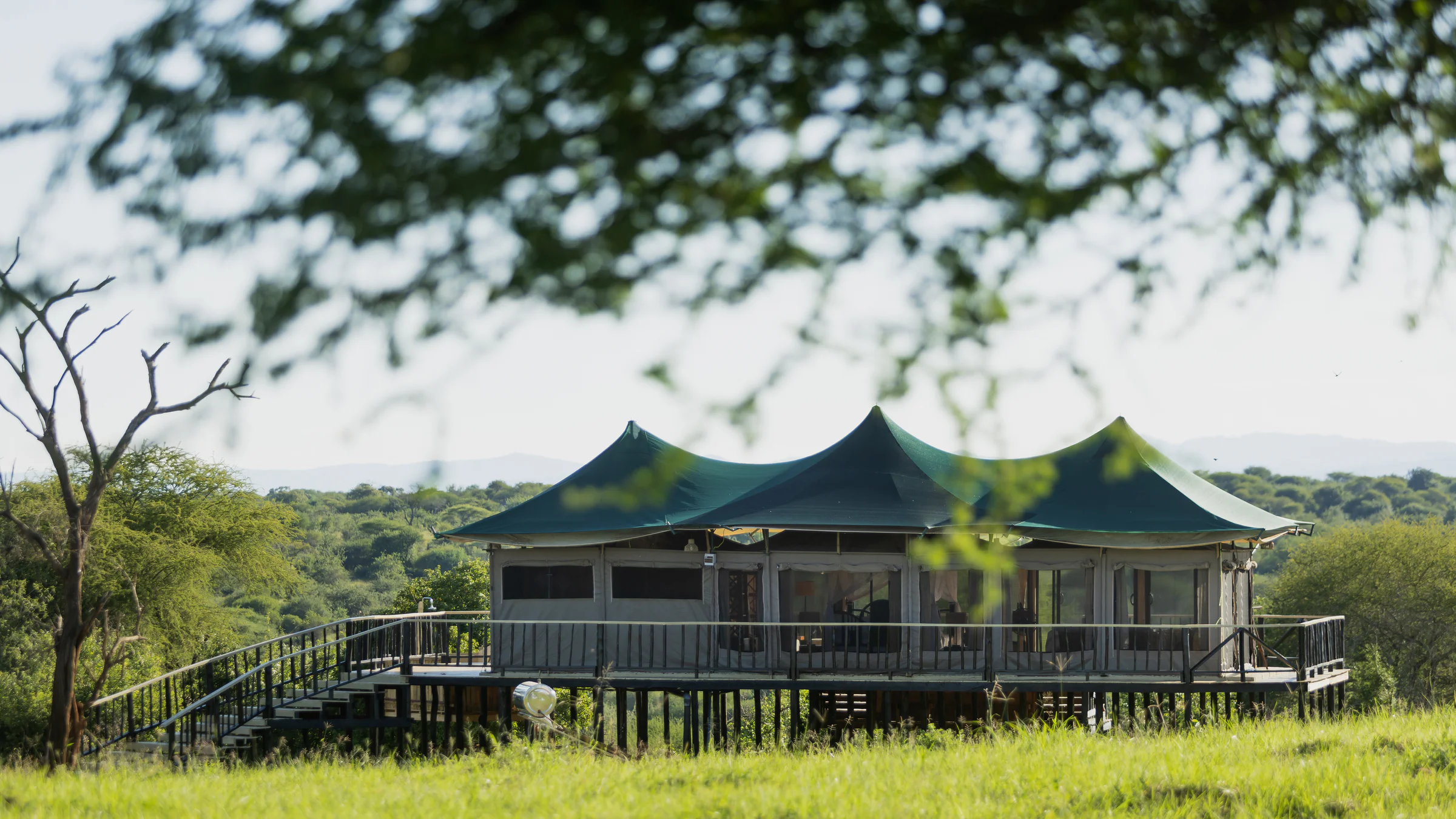
Our Serian Tarangire Camp ($221–$443/night) is positioned specifically to take advantage of this spectacle. Set among ancient baobabs overlooking the Tarangire floodplains, the camp puts you within walking distance of prime elephant territory. Morning and afternoon game drives follow the herds along the river, and it is not unusual to watch elephants from your tent veranda during the heat of the day.
The Baobab Landscape: A Photographer's Paradise
If Tarangire's elephants are the headline act, the baobab trees are the stage set. Nowhere else in Tanzania will you find such a dense concentration of these ancient, other-worldly trees. Some specimens are estimated to be over 1,000 years old, their massive trunks swollen with stored water, their twisted branches reaching skyward like inverted root systems.
The combination of elephants and baobabs creates photographic opportunities that are impossible to replicate elsewhere. A herd of elephants silhouetted against a sunset sky, framed by the gnarled trunk of a baobab — that is a Tarangire photograph, and it is one of the most iconic images in African wildlife photography.
The Serengeti's landscape, by contrast, is defined by open grasslands and kopjes (rocky outcrops). It is beautiful in its vastness, but it lacks the dramatic foreground elements that make Tarangire photographs so distinctive.
Planning a photography safari? Talk to our team about dedicated photo-focused itineraries with extended time in Tarangire.
Tree-Climbing Lions: Tarangire's Secret
Most safari-goers associate tree-climbing lions with Lake Manyara, but Tarangire has its own population of lions that regularly ascend sausage trees and large acacias. This behaviour is not fully understood — theories range from escaping tsetse flies to gaining a vantage point over prey — but witnessing a pride of lions draped across the branches of a tree is one of the most remarkable sights on any safari.
In the Serengeti, lions are predominantly ground-dwelling. You will see them resting in the grass, hunting on the plains, and lounging on kopjes. These are extraordinary encounters in their own right, but tree-climbing lions add a dimension to Tarangire that few parks can match.
550+ Bird Species: A Birder's Dream
With over 550 recorded bird species, Tarangire has the highest bird diversity of any park on the Northern Circuit. The swamp systems, riverine forests, and savannah habitats support an extraordinary range of species, from massive kori bustards and secretary birds to tiny sunbirds and weavers.
Key birding highlights include:
- Yellow-collared lovebirds — endemic to Northern Tanzania, common in Tarangire's acacia woodlands
- Ashy starlings — another near-endemic found in the baobab belt
- Martial eagles and bateleurs — powerful raptors that patrol the savannah
- Rufous-tailed weaver — a Tanzanian endemic species
- Greater and lesser flamingos — seasonal visitors to the swamps
The Serengeti is excellent for raptors and grassland birds, but Tarangire's habitat diversity gives it the edge for overall species count. If birding is part of your safari, Tarangire is non-negotiable — and one day simply is not enough to explore the different habitats.
Fewer Crowds, More Authentic Experience
Here is where Tarangire delivers something the Serengeti cannot: solitude. During peak season (July–October), the Serengeti's Seronera Valley and the Ngorongoro Crater can have dozens of vehicles clustered around a single lion pride. It is still spectacular, but the presence of 15 other Land Cruisers diminishes the sense of wilderness.
In Tarangire during the same period, you will often have sightings entirely to yourself. A herd of 200 elephants crossing the river, with your vehicle the only one in sight. A leopard in a sausage tree, observed in complete silence. A sunset over the baobab forest with no other human presence visible in any direction.
This is not because Tarangire lacks wildlife — it is because most itineraries allocate just one night here, so vehicles pass through quickly. Travellers who stay two or three nights get the park largely to themselves, especially in the southern and eastern sectors that day-trippers never reach.
Ready to experience Tarangire without the crowds? Contact us for a custom itinerary with 2-3 nights in the park.
Recommended Tarangire Itinerary: 2-3 Days
Based on our experience, here is the ideal way to experience Tarangire:
| Day | Activity | Focus Area |
|---|---|---|
| Day 1 (PM) | Arrive from Arusha, afternoon game drive | Northern sector, Tarangire River |
| Day 2 (Full) | Full-day game drive with picnic lunch | Southern sector, Silale Swamps, baobab belt |
| Day 3 (AM) | Morning game drive, then depart for Ngorongoro | River crossing points, elephant herds |
Two nights gives you a full day plus two half-days in the park — enough to explore both the popular northern sector and the wilder southern reaches. Three nights allows you to add a walking safari, a night game drive (available in certain concession areas), or simply a more relaxed pace with time to sit at a waterhole and let the wildlife come to you.
We recommend staying at Serian Tarangire Camp, which offers both standard and premium rates ($221–$443/night) depending on season and room category. The camp's location gives you quick access to the best game-viewing areas without long drives at the start and end of each day.
When the Serengeti Wins: Being Honest
We are advocates for Tarangire, but we are also honest operators. There are scenarios where the Serengeti is the clear winner:
- Great Migration: If witnessing the wildebeest migration and river crossings is your primary goal, the Serengeti (and specifically our Enkutoto Migration Camp, $250–$400/night) is the only choice.
- Big cats: The Serengeti has the highest density of lions in Africa and exceptional leopard and cheetah sightings. Enkirari Wilderness Camp ($250–$325/night) in the Central Serengeti puts you right in the heart of predator territory.
- Vast landscapes: If endless horizons and the feeling of infinite space move you, the Serengeti's open plains are unmatched.
- Extended stays: The Serengeti's size supports 3–5 day stays without repetition. Each sector feels like a different park.
The ideal approach is not Tarangire or Serengeti — it is both. A well-designed Northern Circuit itinerary gives each park the time it deserves. Check out our safari tour packages for itineraries that balance both parks properly.
The Perfect Northern Circuit: Combining Both Parks
Our recommended 7-day Northern Circuit itinerary allocates time as follows:
- Tarangire: 2 nights at Serian Tarangire Camp
- Ngorongoro: 1-2 nights at Naserian Safari Camp ($230–$380/night) or The Castle at Ngorongoro ($290–$480/night)
- Serengeti: 2 nights at Enkirari Wilderness Camp
This gives each park meaningful time while keeping the total trip to a practical 7-8 days. Start and finish in Arusha with a night at Acacia Retreat ($140–$220/night) for pre- and post-safari rest.
Practical Information for Tarangire
| Detail | Information |
|---|---|
| Location | 120 km southwest of Arusha |
| Drive time from Arusha | 2-2.5 hours |
| Park fees (2026) | $53/day adult, $18/day child (5-15) |
| Best months | June-October (dry), Jan-Feb (green, calving) |
| Worst months | April-May (heavy rains, some roads impassable) |
| Key wildlife | Elephants, tree-climbing lions, leopards, 550+ birds |
| Recommended stay | 2-3 nights minimum |
| Our camp | Serian Tarangire Camp ($221-$443/night) |
Frequently Asked Questions
Is Tarangire better than the Serengeti?
They offer different experiences. Tarangire excels for elephants, baobab landscapes, birding, and solitude. The Serengeti wins for the Great Migration, big cat density, and vast open plains. We recommend visiting both on a Northern Circuit safari rather than choosing one over the other.
How many days should I spend in Tarangire?
We recommend a minimum of 2 nights (arriving afternoon Day 1, full day Day 2, departing morning Day 3). Three nights is ideal for photographers, birders, and anyone who values a relaxed pace over ticking off parks.
When is the best time to visit Tarangire?
June to October is peak season when dry conditions concentrate wildlife along the Tarangire River. Elephant herds are at their largest during this period. January and February offer green-season calving and excellent birding with fewer crowds and lower rates.
Can I see the Big Five in Tarangire?
You can see four of the Big Five in Tarangire — lion, leopard, elephant, and buffalo. Rhinoceros are not present in the park. For rhino sightings, combine Tarangire with a Ngorongoro Crater visit, where a small population of black rhino resides.
Is Tarangire good for a first-time safari?
Absolutely. Its proximity to Arusha (just 2 hours), high wildlife density, manageable size, and excellent camps make it an ideal first park on a Northern Circuit safari. Starting here builds excitement before moving on to Ngorongoro and the Serengeti. Contact us to plan your first safari.
Start planning your Tanzania safari
Our safari experts craft personalized itineraries for every interest and budget. Tell us what you are looking for.
Request a Free Quote